

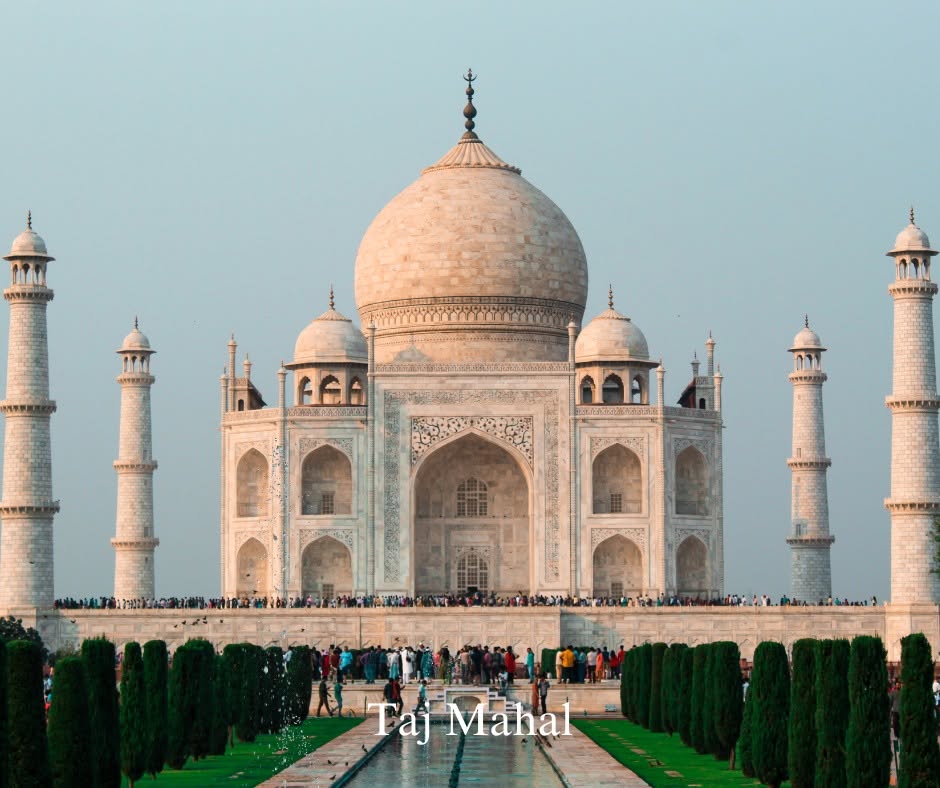
The Charbagh: Designing Paradise on Earth
The Charbagh: Designing Paradise on Earth
While the grand forts, tombs, and mosques of Mughal architecture in India need no introduction, the empire’s spectacular gardens transformed the landscapes of Delhi, Agra, and Kashmir forever. Among these, the Charbagh the traditional fourfold garden layout stands out as a profound attempt to manifest paradise on earth.
The very word “paradise” finds its etymological roots in the ancient Persian pairidaēza, which literally translates to a “walled garden.” Across various religious traditions, the concept of a heavenly sanctuary is deeply intertwined with nature. In biblical texts, paradise is an abundant orchard home to the Tree of Life and the Tree of Knowledge. In the Quran, Jannah (heaven) is depicted as a lush haven of natural springs, shaded groves, and flowing rivers of water, milk, and honey.
For the early Mughals, these gardens served a deeply personal and psychological purpose: they were designed as a vital escape from the harsh desert elements. When Babur, the first Mughal emperor, arrived in Hindustan, he found himself bracing against the intense heat and blinding dust of the northern plains. Historical accounts frequently document his profound sense of longing a nostalgic yearning for the cool breezes, flowing streams, and abundant orchards of his Central Asian homeland. To cope with this displacement, he began constructing his own private sanctuaries on the subcontinent.
His successors continued this poetic tradition. By the 17th and 18th centuries, Mughal gardens had reached their zenith across India, meticulously landscaped with flowering trees, fruit orchards, and deep-shaded groves. The Charbagh layout perfectly balanced aesthetic beauty with practical engineering. Designed as precise squares or rectangles, the grounds were divided by axial water channels into four distinct quadrants, or parterres. These horticultural wonders featured grand, towering entryways sometimes up to four distinct gates and trees were planted symmetrically to mirror and enhance the geometric lines of the landscape. Beyond serving as quiet places of reflection, they evolved into vibrant social spaces hosting public assemblies and lavish imperial feasts. If you ever find yourself traveling through northern India, walking through a historic Charbagh is an essential experience a chance to step directly into a living piece of history.
Follow more fun stories on our page Your Holidays Co.,Ltd.